
A closing gift says thank you. The next deal comes from the year after it, and from whether your buyers still think of you when a coworker asks who helped them buy their house.
Gift prices below are rough budgets, and the clients in the examples are made up. On taxes and referral rules, your accountant and your broker get the final word.
What makes a closing gift good
- It's useful in the first two weeks. Moving week is chaos, and a gift that fixes a moving-week problem gets remembered.
- It's about them, not you. Your logo on a cutting board is an ad, and clients can tell. Put their name or their new address on things instead.
- The whole household can use it. Wine is a guess unless you know they drink it, and flowers or scented candles are a guess if anyone has allergies or a cat.
- It needs no assembly. Nobody wants to build anything the week they move.
- It comes with a handwritten note. One line about their search, their kids or the house does more than a bigger gift.
Closing gift ideas by budget
Pick one budget you can afford on every deal and use it every time, because clients who are friends compare notes. Go bigger for a large sale, a repeat client or someone who has already sent you business.
Scroll the table horizontally if needed.
| Budget | For buyers | For sellers |
|---|---|---|
| Up to $25 | A box from the bakery nearest the new house. Furnace filters in the house's size (it's printed on the old filter). A key ring with a tag for every new key. | Snacks and drinks for moving day. A framed print of the listing photo they liked best. |
| $25 to $75 | Dinner on move-in night: a gift card for the closest pizza or Thai place. A first-night box with toilet paper, light bulbs, a box cutter, trash bags, a shower curtain and phone chargers. | A packing kit (tape gun, markers, bubble wrap) delivered two weeks before the move. A gift card for a restaurant near their new place. |
| $75 to $150 | A cleaning before they move in. A real tool kit for first-time buyers. A family membership at the local zoo, museum or botanical garden for people new to town. | A move-out cleaning, so they can hand over the keys and go. A watercolor or sketch of the house they're leaving. |
| $150 and up | A locksmith to rekey every lock (ask for an all-in quote). Half a day of a handyman to hang curtains and mount the TV. | Movers for the heavy pieces. A photo session at the house before they leave it. |
The first row matters at tax time: the IRS lets you deduct no more than $25 per person per year for business gifts. Spending more is fine; the extra just isn't deductible as a gift. The details are further down. [3]
Skip anything with your logo on it, giant baskets padded with filler, and anything engraved before you've checked how both clients spell their names.
Clients who need a different gift
- First-time buyers: practical beats pretty. They probably don't own a ladder, a plunger, a stud finder or a fire extinguisher yet.
- People new to town: anything that makes the place feel like theirs, like a membership, your list of ten favorite local spots, or a gift card for the coffee shop on their corner.
- Downsizers leaving a long-time home: something that keeps the old house, like a photo of the kids' height marks on the pantry door. Arranging a donation pickup counts as a gift too.
- Investors: skip the doormat. Your list of contractors who answer the phone is worth more to them.
- Divorce and estate sales: no champagne, and nothing that says congratulations. A card that thanks them for trusting you at a hard time is enough.
- Long-distance buyers: ship to the new address after they arrive, and pick something that won't melt or spoil on a porch.
A card after an estate sale
Solveig, Thank you for trusting me with your mother's house. I know these weeks were hard. I'm glad you found her recipe box on the last day, and I hope it's somewhere you can see it. Lucinda
Fictional. It acknowledges the loss, remembers one small thing from the last day and asks for nothing.
When to give it, and what to write
Bring the card to the closing table and send the gift to the house. Buyers leave closing with a folder of documents, new keys and a lot on their minds, and a big basket is one more thing to carry. The exception is anything meant for that night, like a dinner gift card or a first-night box, which can ride home with them.
Sellers need their gift before the move. A packing kit is useless after moving day, and a move-out cleaning has to be booked ahead of it.
Then mail a second card to the new address so it arrives in their first week. It will be some of the first mail they get there, and it reaches them after the closing-day rush, when they have time to read it.
A card mailed to the new house
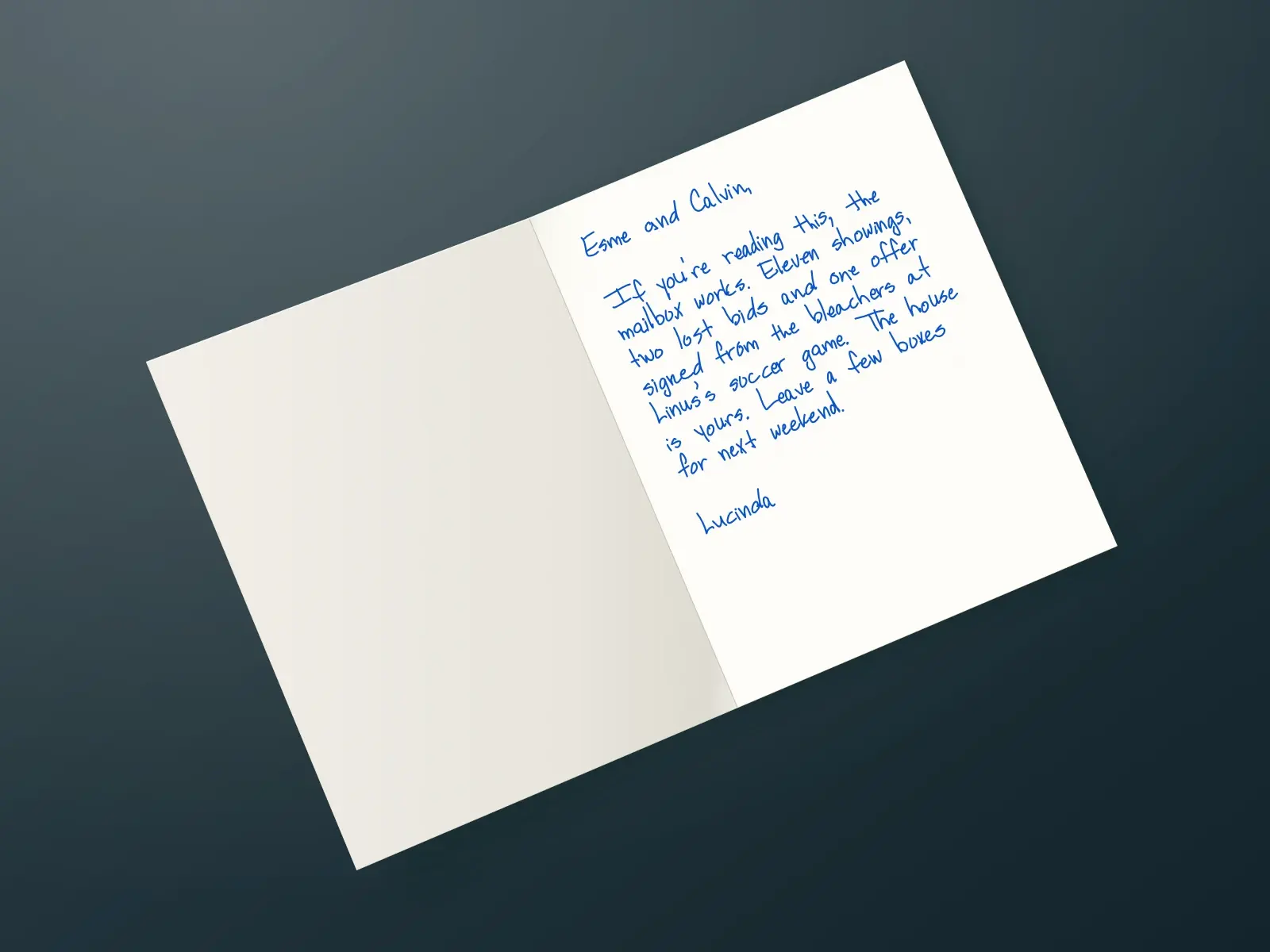
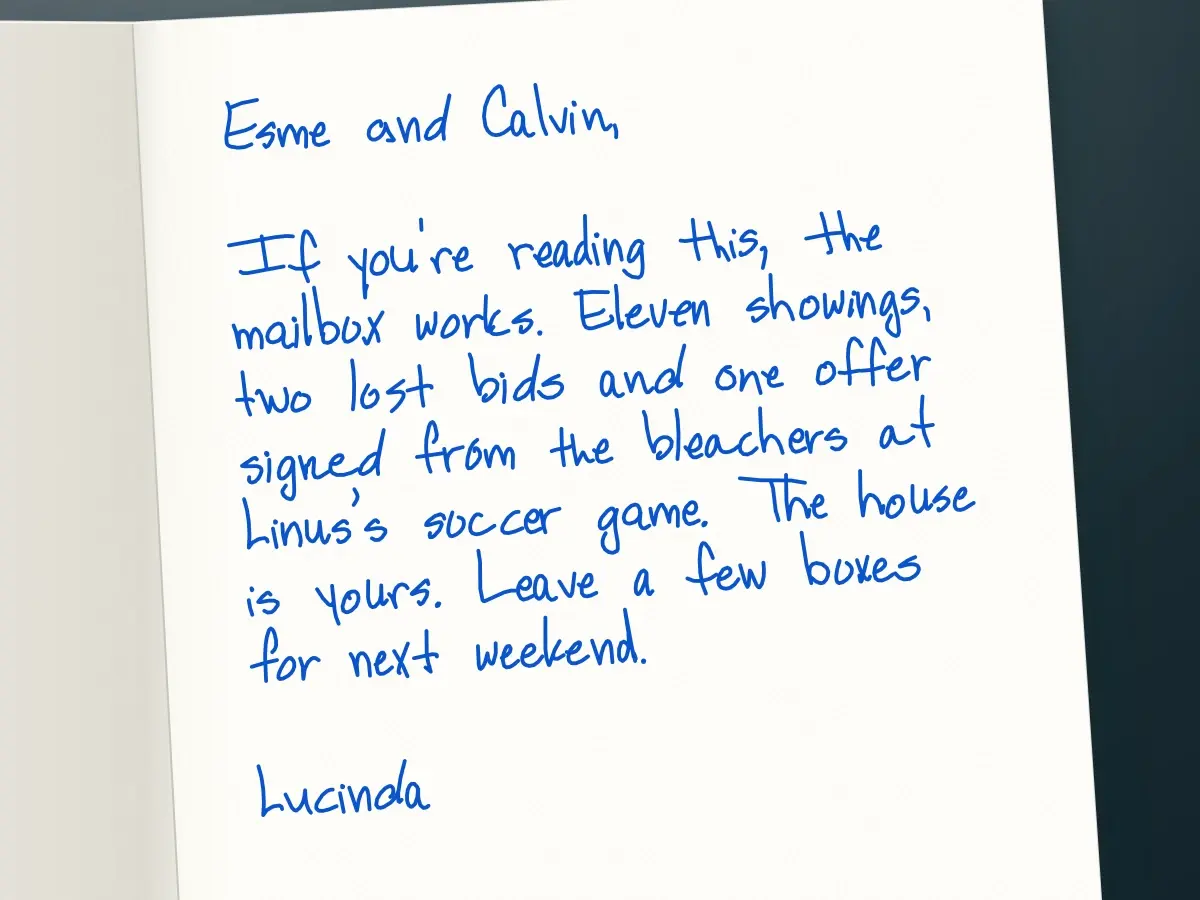
Esme and Calvin, If you're reading this, the mailbox works. Eleven showings, two lost bids and one offer signed from the bleachers at Linus's soccer game. The house is yours. Leave a few boxes for next weekend. Lucinda
Fictional. The bleachers detail came from their search. Every client has one; write it down the day it happens.
The tax rule and the referral rule
Why the year after closing matters more than the gift
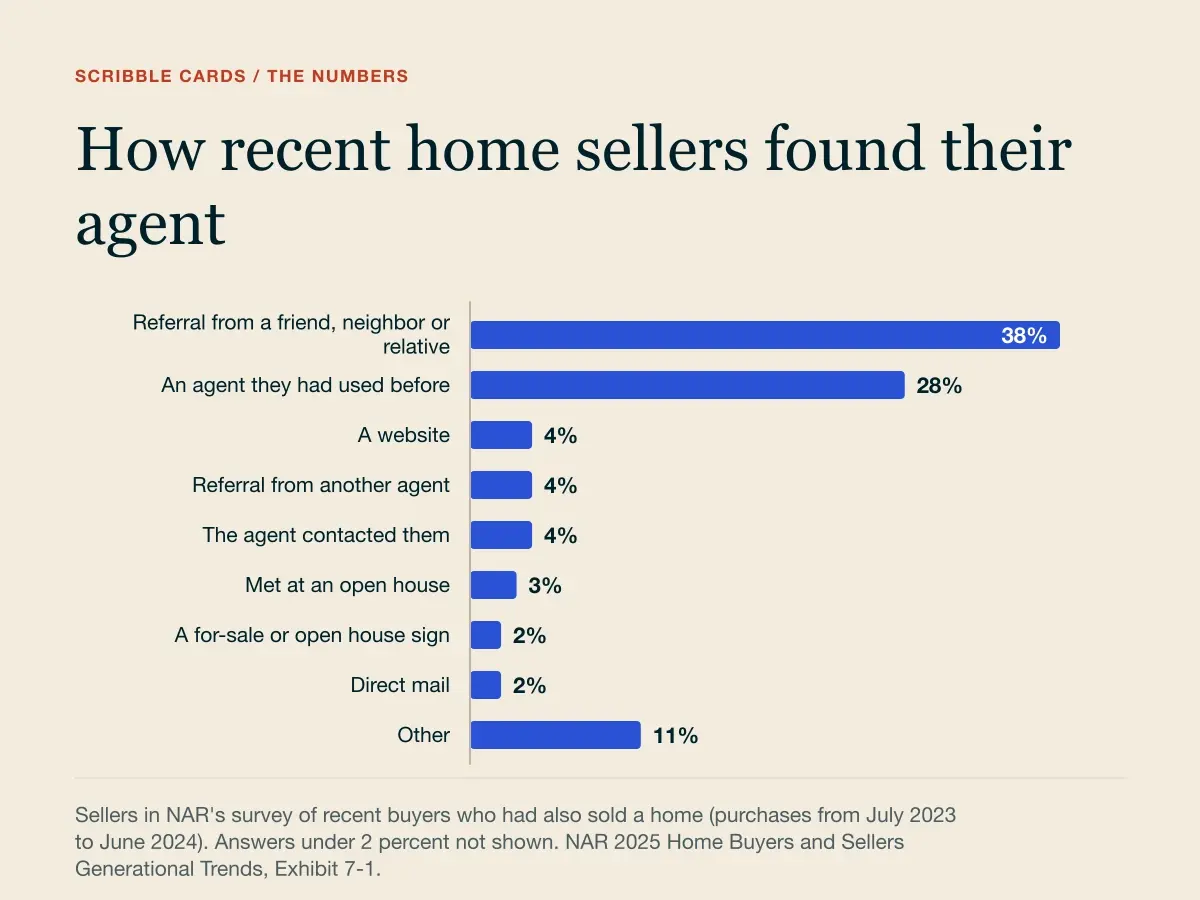
Most sellers pick an agent they already know or one someone vouched for. In NAR's 2025 Home Buyers and Sellers Generational Trends report, 38 percent of sellers found their agent through a friend, neighbor or relative, and 28 percent used an agent they had worked with before. No other listed route, from websites to open houses to direct mail, reached more than 4 percent. [1]
Past clients do the vouching. The typical seller in that survey had recommended their agent twice since the sale, and a quarter had done it four or more times. But 35 percent hadn't recommended their agent at all. And sellers in NAR's 2026 survey had owned their homes for a median of 12 years, so a client's own next sale is a long way off. The referrals in between go to whichever agent they still remember. [1][2]
A year of follow-up, month by month
The first year after closing
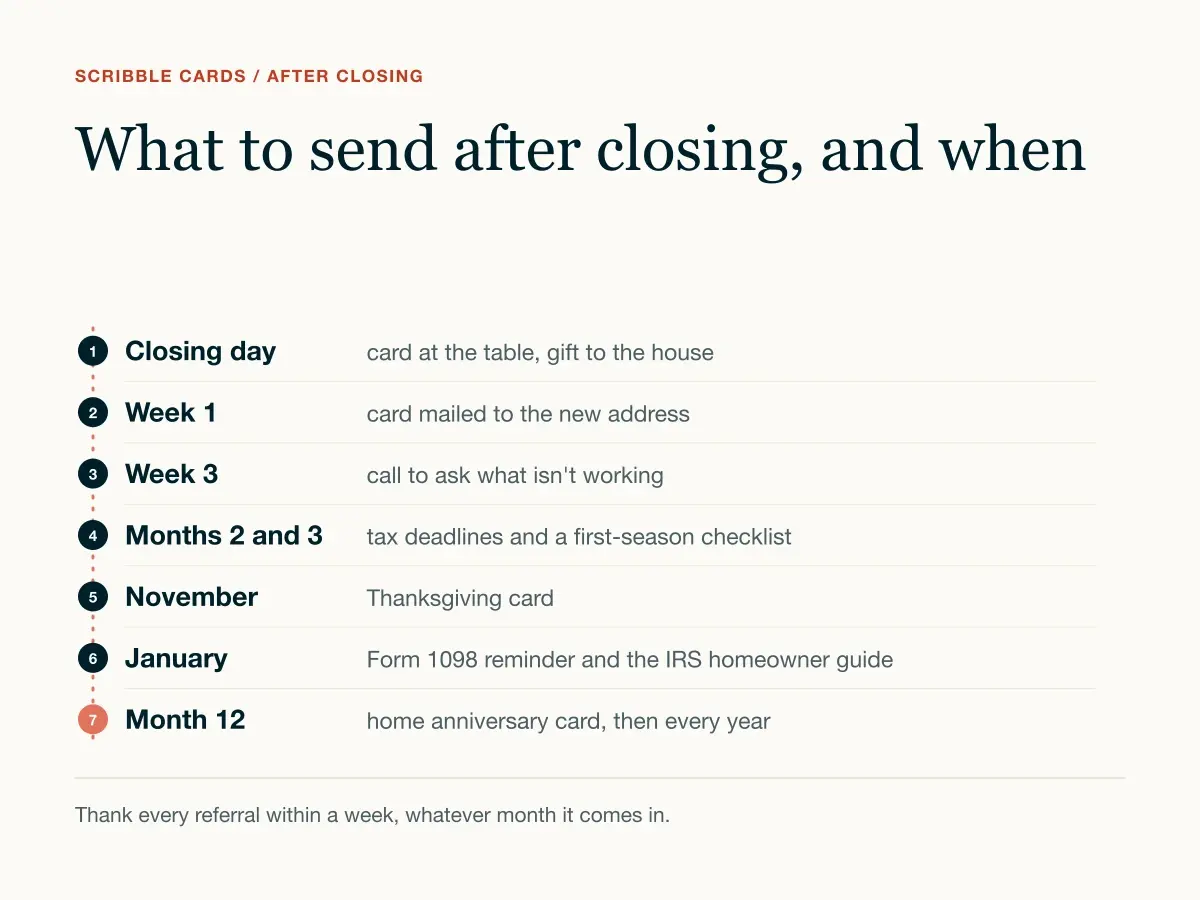
Closing day: card at the table, gift to the house
Save the closing date where you'll see it again. It's their home anniversary from now on, and using the closing date, not the move-in date, keeps it from shifting around.
Week 1: a card to the new address
Mailed so it lands while they're unpacking, like the example above.
Week 3: a call
"Anything not working the way it should?" Have your list of plumbers and electricians ready. Half of staying useful is knowing a plumber who picks up.
Months 2 and 3: deadlines and the first season
If your state has a homestead exemption that buyers must apply for, text them the county link and the deadline. A few weeks later, send a short list for the season: furnace filter, smoke alarm batteries, the garden hose off before the first freeze, gutters once the leaves are down.
November: a Thanksgiving card
It lands before the December rush and doesn't assume what anyone celebrates. If you send Christmas cards to past clients, keep those too.
January: help at tax time
Remind first-time buyers to watch for the lender's mortgage interest statement, and send them the IRS guide for homeowners, Publication 530. Leave the tax advice to their preparer.
Month 12: the home anniversary card
Then every year after. One warm line about the house, your name, and a P.S. with one useful offer.
IRS Publication 936 says the mortgage interest statement (Form 1098) for each year should be sent by January 31 of the following year, so a mid-January note gives buyers a heads-up before it arrives. The guide to send with it is Publication 530, Tax Information for Homeowners. [6][5]
A home anniversary template for your whole list
{{first_name}}, One year in the house. By now you know which stair creaks and which neighbor waves first. I hope it's been a good one. Happy home anniversary, Lucinda P.S. If you ever need a good plumber, or want to know what the house is worth now, text me.
{{first_name}} fills in from your list; the card above shows it filled in for Marcus and Dana. For a couple, put both names in that column.
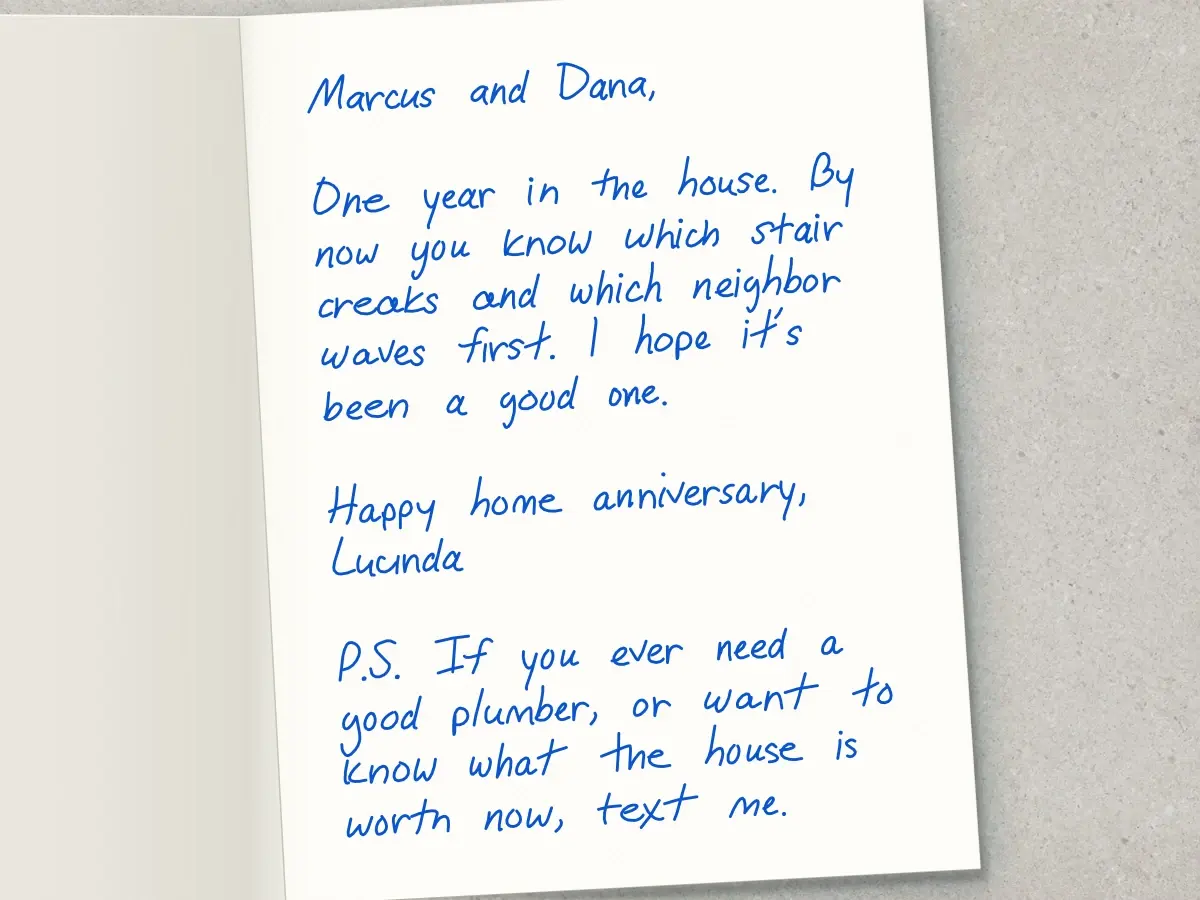
In Scribble Cards you can upload past clients once with their closing dates, and a home anniversary card goes out every year, each one written individually in real pen with a real stamp. Once a year, check the list for clients who have sold or moved, so a card doesn't land at a house that isn't theirs anymore.
What a year of follow-up costs
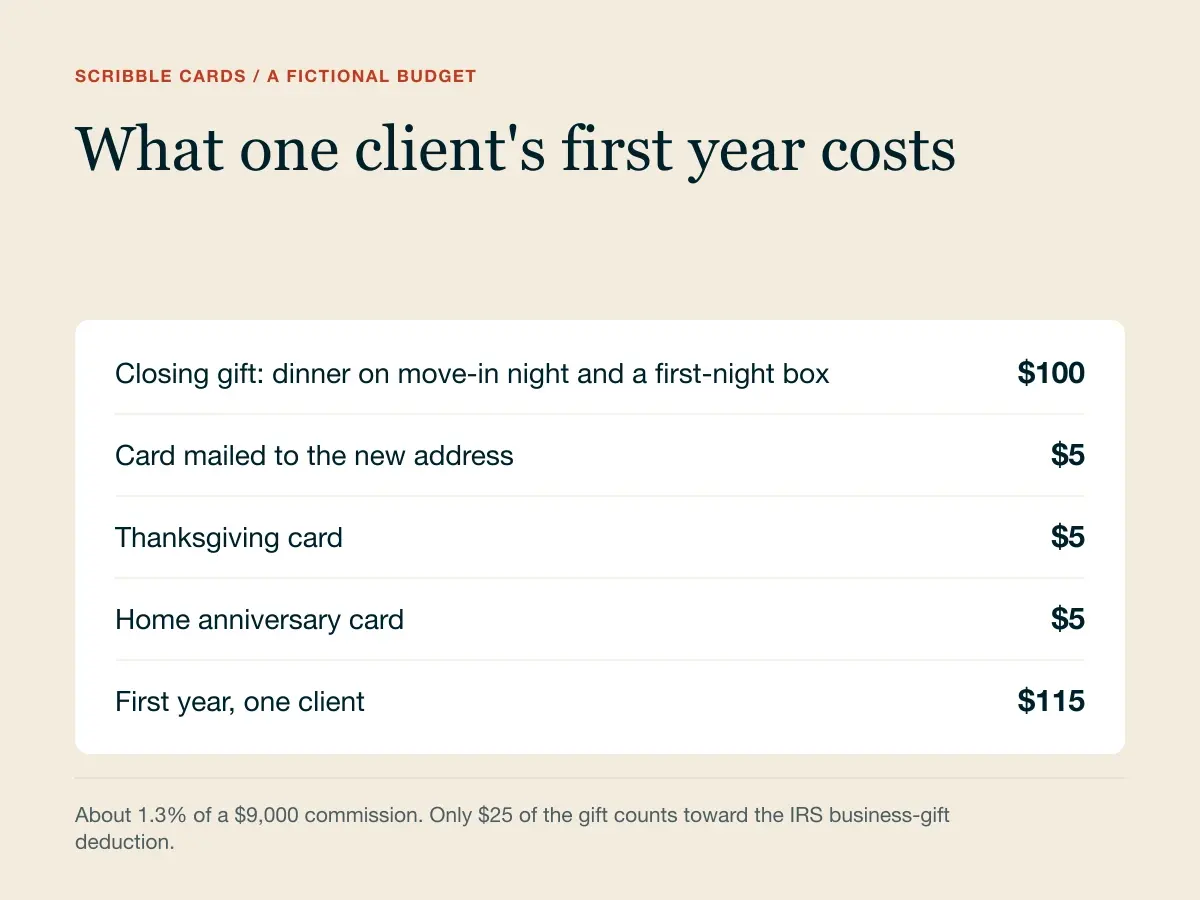
In this fictional budget, the gift and three cards come to about $115 for one client's first year. On a $9,000 gross commission, that's about 1.3 percent. After that, the Thanksgiving and anniversary cards cost about $14 a client per year.
The card costs are an estimate of $5 each, for a card written in pen, addressed in pen, stamped and mailed. Hand-delivered gifts and your time are on top.
Thank every referral the same week
When a past client sends someone your way, thank them that week, before you know whether it will close. They put their name behind yours either way.
A referral thank-you
Abe, You told the Okonkwos about me at your block party, and yesterday they got the keys to the brick colonial on Sycamore. Thank you for sending them my way. I hear they've already offered to host next year's party. Lucinda
Fictional. It thanks him for the introduction itself. No gift, and no "who else do you know?"
Frequently asked questions
How much should a realtor spend on a closing gift?
An amount you can repeat on every deal that still buys something useful. $50 to $150 covers most good gifts, like dinner on move-in night or a cleaning before they move in. You'll see percent-of-commission rules online, but we couldn't find real data on what agents spend, so pick a number you can keep and go bigger for large deals and repeat clients.
Are realtor closing gifts tax deductible?
Up to $25 per client per year. IRS Publication 463 caps the deduction for business gifts at $25 per person, and costs like engraving, wrapping and shipping generally don't count toward it. Anything above $25 isn't deductible as a gift. Ask your accountant how this applies to you. [3]
Should you give sellers a closing gift?
Yes, but a different one. Sellers are leaving, so skip anything for the house and give them something for the move or the next place: a packing kit two weeks ahead, a move-out cleaning, or a photo of the house they're leaving.
When should a realtor give a closing gift?
Give the card at closing and send the gift to the new house in the first week, unless it's meant for that night, like a dinner gift card. Sellers need their gift before moving day. For buyers moving from out of state, ship it after they arrive.
Can you give a past client a gift for a referral?
Be careful. The CFPB says RESPA prohibits giving a consumer an incentive in exchange for referring business, with no exception for small gifts, and state rules vary. Thank them with a card, and ask your broker before you give anything of value. [4]
What do you write in a home anniversary card?
One warm line about the house and the year they've had in it, then your name. If you like, add a P.S. with one useful offer, like a plumber's number or a value check. Leave out market updates and referral requests. The card's only job is to show you remember them.
Sources and methodology
Reviewed .
- 2025 Home Buyers and Sellers Generational Trends Report
National Association of Realtors · Published · Accessed
Exhibits 7-1 and 7-11. Survey mailed in July 2024 to people who bought a primary residence between July 2023 and June 2024 (5,390 responses); seller figures come from buyers who also sold a home.
- Top 10 Takeaways from NAR's 2026 Profile of Home Buyers and Sellers
National Association of Realtors · Published · Accessed
By Jessica Lautz. Sellers had owned their homes for a median of 12 years before selling, a record.
- Publication 463 (2025), Travel, Gift, and Car Expenses
Internal Revenue Service · Accessed
Chapter 3, Gifts: the $25 limit, incidental costs, gifts to a customer's family members, and packaged food or beverages.
- Real Estate Settlement Procedures Act FAQs
Consumer Financial Protection Bureau · Accessed
Gifts and promotional activity answers, updated October 7, 2020.
- Publication 530 (2025), Tax Information for Homeowners
Internal Revenue Service · Accessed
The IRS guide for homeowners, 2025 edition.
- Publication 936 (2025), Home Mortgage Interest Deduction
Internal Revenue Service · Accessed
The statement for each year should be sent by January 31 of the following year.