
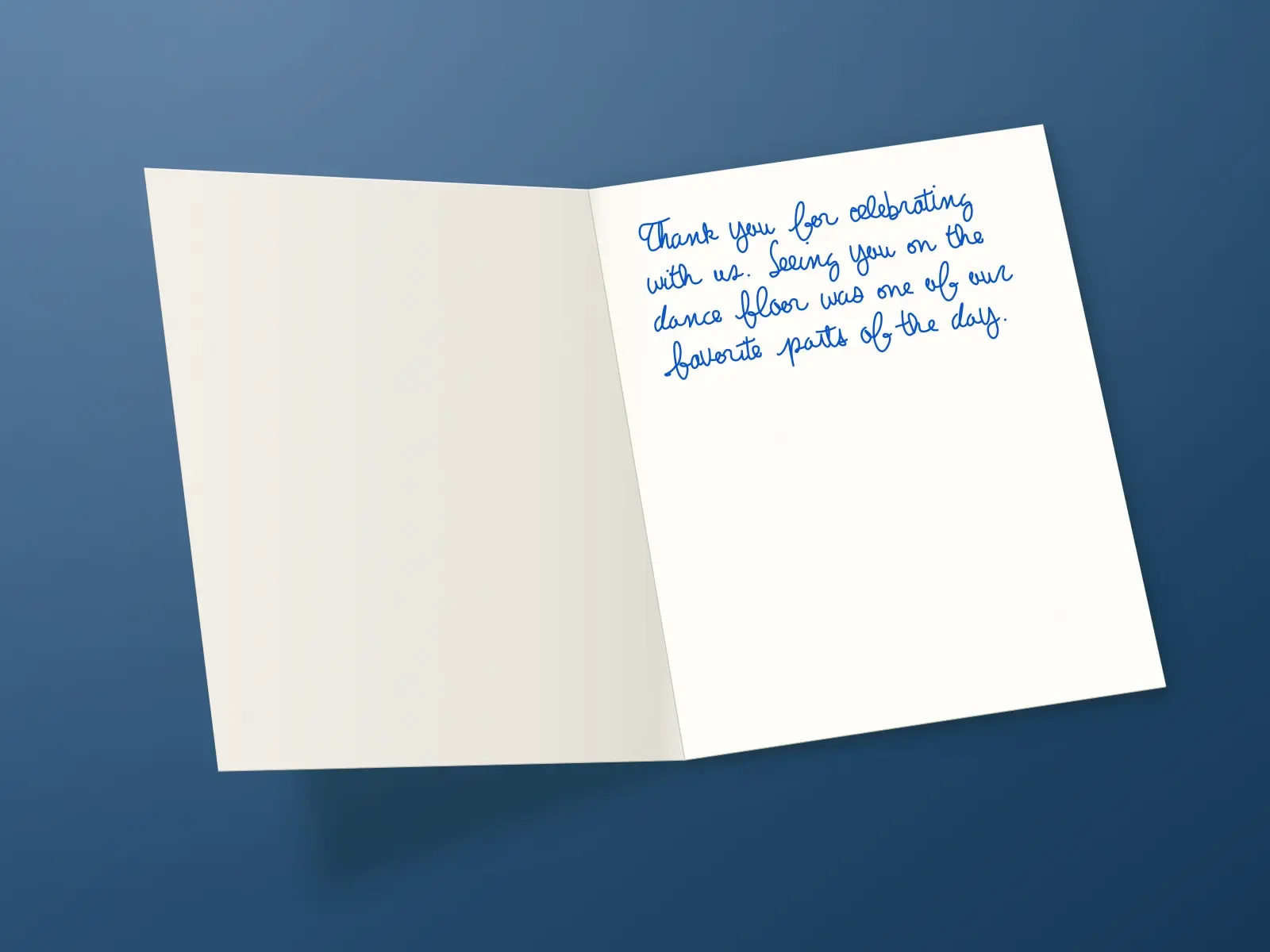
The easiest wedding thank-you note starts with the gift list: who gave what, whether they were at the wedding, and one thing you remember about seeing them. Then write a few sentences to that person. You can use the same basic structure without sending everyone the same note.
This guide has complete examples for money, physical gifts, and experiences, including people who couldn't attend. There are also ways to thank someone for being there when no gift was involved.
Replace the names and gift details before sending. Keep the parts that are true: you don't need to invent a kitchen renovation, claim you've used a gift already, or rank it among your favorites to write a warm thank-you.
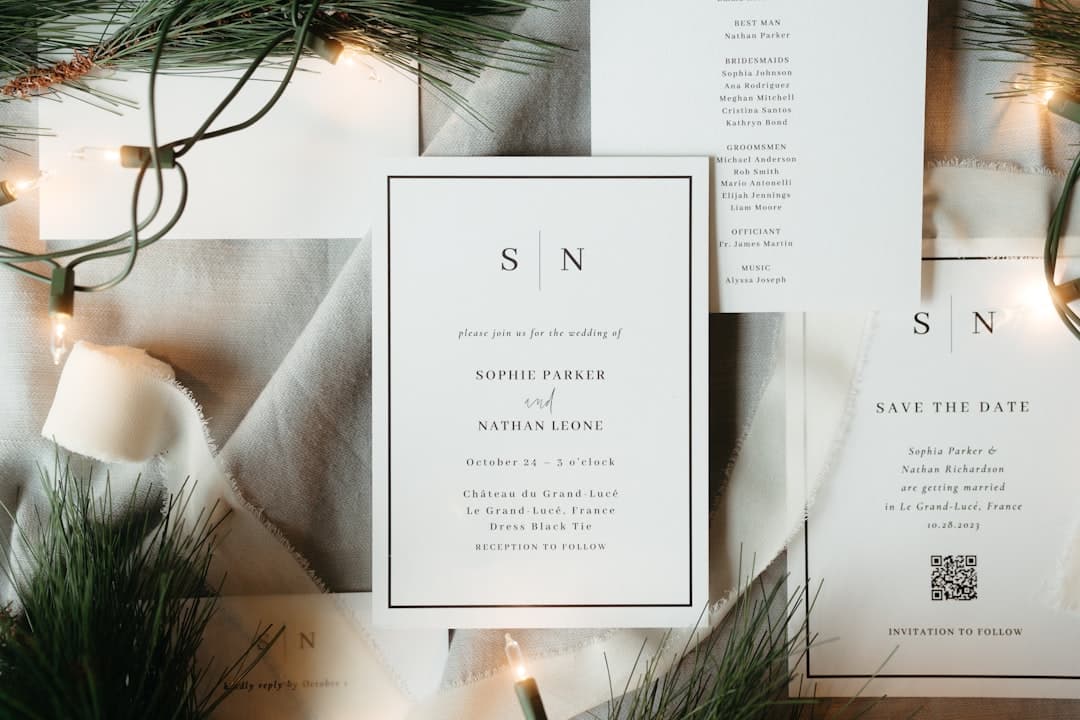
When to Send Wedding Thank You Cards
Start writing as gifts arrive, including those sent before the wedding. A note also lets the giver know the parcel or payment reached you. A few cards at a time is easier to keep up with than an entire guest list after the celebration.
Emily Post's wedding thank-you guidance recommends sending notes within three months of receiving a gift. Treat that as a planning limit rather than a reason to wait. If you're already late, send the thank-you now and keep any apology brief. Read the full etiquette guidance.
Keep a list with the giver's name, the gift, the mailing address, and a box to mark when the card is sent. For a joint gift, record everyone who contributed. If a card has become separated from a gift, check packaging or your registry before guessing.
Put it in a card.
Choose a front, make the words yours. We’ll write it with a real pen and mail it for you.
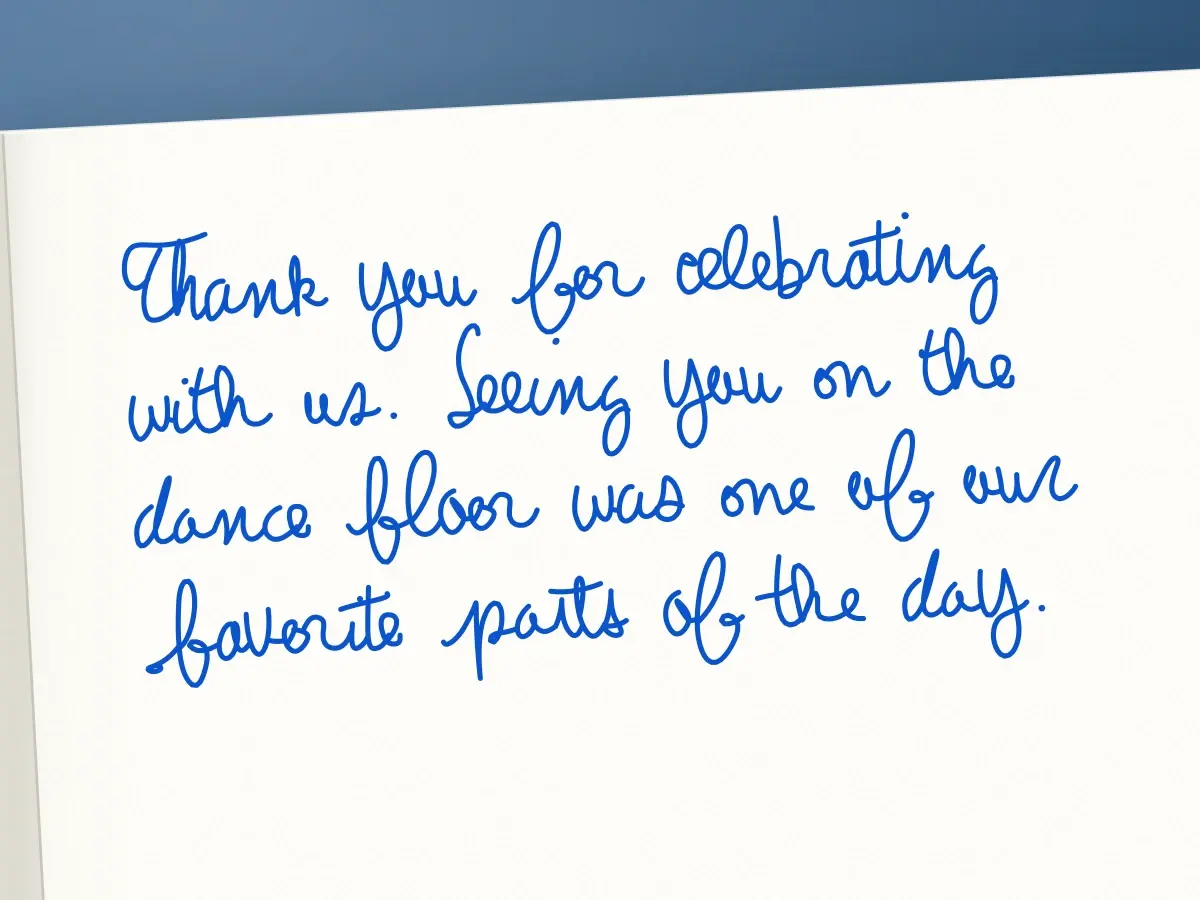
Handwriting example · Charlotte
Your edited message is previewed in the designer.
Who Needs to Receive a Thank You Card
Thank everyone who gave a gift, including a cash gift, check, or contribution to a fund. For a group gift, write to each contributor; one card can address a couple or household who gave jointly.
Also think about people who hosted an event, helped with planning, made travel arrangements for others, or gave you time when you needed it. Their note can describe what they did without mentioning money or a present.
You can thank guests simply for celebrating with you. Don't use their card to hint that a gift was missing, and don't ask someone who couldn't attend to explain why.
Wedding Thank You Card Wording: The Basic Formula
Use the recipient's name. Thank them for the gift or the help they gave, then add a true detail about its use or your time together. Close in the way you would normally write to them, with both partners' names when the thanks comes from both of you.
For a guest who came without a gift, a short note can stand on its own:
For a gift, use this structure and replace the bracketed parts:
Wording Examples for Cash or Check Gifts
You can say 'your generous gift' without naming an amount. Mention a plan if you have one, or say you look forward to choosing how to use it. You don't have to give an account of your finances.
For close family, toward a home:
For a relative, toward a trip:
For friends, without a decided purchase:
For a colleague:
For someone you met at the wedding:
For one contributor to a group gift:
Wording Examples for Physical Gifts
Name the item so the giver knows it reached you. If it isn't your taste or you received a duplicate, thank them for the thought without making up a claim that you use it every day.
For an appliance you have used:
For table linen:
For cookware you have not used yet:
For a personalized gift:
For a gift that is not quite your taste:
For a family keepsake:
Wording Examples for Experience Gifts
Say what you're looking forward to if the experience is still ahead. If you've already been, mention one detail you enjoyed. Don't pretend to have booked dates you haven't chosen.
For a honeymoon contribution:
For a restaurant gift card already used:
For a class not yet booked:
For tickets:
Wording for People Who Couldn't Attend
Thank them for the gift or good wishes without making them feel guilty about missing the wedding. You don't need to repeat private health, money, or family circumstances in the card.
For a close friend who sent a gift:
For a relative unable to travel:
For a colleague or acquaintance:
For a late thank-you:
Wedding Thank You Card Etiquette Rules
Check names and addresses against current information. Use the names and titles people actually use, rather than deciding the form of address from their age or assuming anyone changed a last name.
Keep the gift record beside you while writing. If you're uncertain which gift came from someone, check your registry, receipts, or a family member who helped collect the cards. Don't guess at an item in the thank-you.
For a joint gift, thank everyone who contributed. For a joint note, make it clear who is sending the thanks. Both partners can share the writing; one person doesn't have to manage the whole list.
Don't compare gifts, mention whether a gift was on the registry, or say what it cost. You can appreciate someone's thoughtfulness without pretending their gift is exactly what you wanted.
Read each note before sending and remove leftover placeholders. Check that any mention of attending, traveling, or dancing is true for that person.
Handwritten vs. Printed Thank You Cards
A handwritten card is a familiar choice for a wedding thank-you. A printed design can still leave room for a personal message inside. The part that needs your attention is the wording to each person, not whether every envelope matches perfectly.
Choose a way of writing you can manage. A short note about the actual gift is more useful than postponing the whole task because the stationery or handwriting doesn't look the way you imagined.
For a large list, divide the names between you and work through a few at a time. Keep a shared record so you don't thank one person twice or miss someone whose gift arrived separately.
Scribble can write your messages with a real pen and mail the cards. You choose the design, edit each message, and preview a handwriting style before ordering. It's useful to have your gift list and mailing addresses ready first.
A service can handle the writing and mailing. You still need to check each name and make the note fit what that person gave or did.
Related Reading
Looking for more on the case for handwritten notes? Check out our guide to the best handwritten card services available today.
We also cover how handwritten notes build relationships in professional settings, and why the same principles apply to personal correspondence.
And for anyone thinking about client gifts or appreciation gestures, our post on handwritten thank you cards and client retention covers the research behind why this kind of gesture works.
Frequently Asked Questions
How soon after the wedding should you send thank you cards?
Start as gifts arrive and send notes promptly. Emily Post's wedding guidance recommends within three months of receiving a gift. If that time has already passed, write anyway; a short apology and a clear thank-you are enough.
Do you have to send thank you cards for every wedding gift?
Thank every giver, including people who sent cash, a check, a transfer, or a fund contribution. Each contributor to a group gift should receive thanks. Mention the gift and a detail that fits your relationship rather than sending a general message to the whole guest list.
How long should a wedding thank you card be?
Three to five sentences usually gives you enough room to name the gift, say something true about it, and acknowledge the person. A close relative or someone who gave substantial help may merit a longer note. You don't have to fill both sides of the card.
What do you write in a wedding thank you card for cash?
Mention the gift without specifying the amount. Something like 'your generous gift' or 'your thoughtful gift' works well. Then add one sentence about what you're putting it toward: a down payment, a kitchen appliance, your travel fund, or whatever feels honest. This shows you actually received it and are using it intentionally.
Is it OK to send wedding thank you cards late?
Late is better than never. If you're past the 3-month mark, send the note anyway and briefly acknowledge the delay: 'We're so sorry this is arriving later than we hoped.' Guests appreciate hearing from you even if the timing isn't perfect. What's not OK is simply never sending one at all.
Do both partners need to sign the thank you card?
Include both partners' names when the thanks comes from both of you. One person can write the note, and you can divide the list between you. For help given specifically to one partner, that person can write a separate personal thank-you as well.
Final Thoughts
Work from the gift list, one person at a time. Before sealing the envelope, check that the name, gift, and detail about the day belong to the same person.
Then mark the card as sent. A few finished notes today will leave fewer waiting tomorrow.
For thank you card wording across every occasion, see our complete thank you cards guide.