
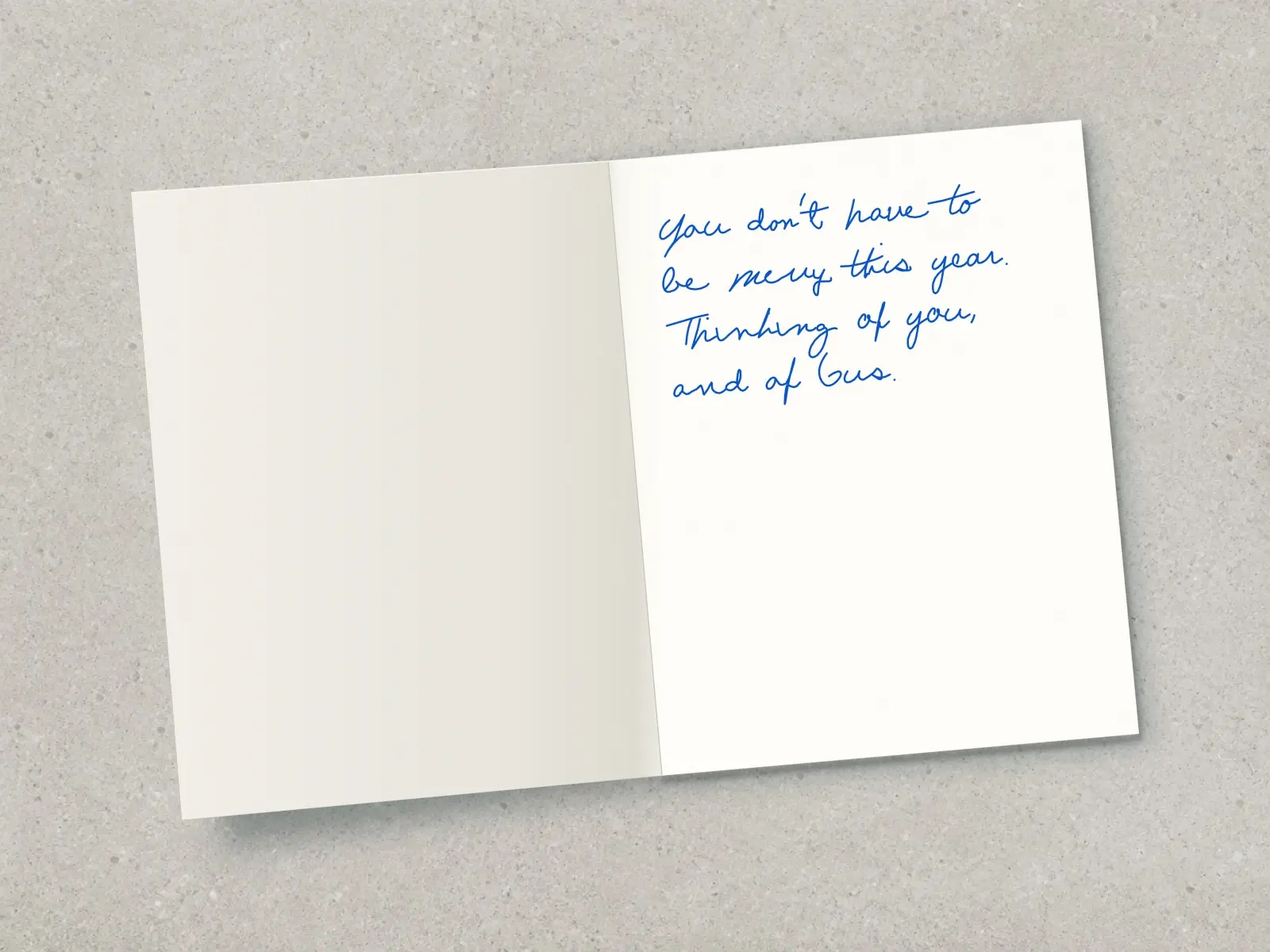
Say you're thinking of them this Christmas, use the name of the person who died, and then offer one real thing or stop there. That's the whole card. Nobody expects you to fix anything.
Below are 35 messages, sorted by who died and how well you know the family, plus a short list of what not to write. The names and memories are invented. Swap in the real ones, especially the name.
Start here: a first Christmas without them
If you only send one line, make it one of these, with the real name swapped in. The name matters more than anything else on the card.
Put it in a card.
Choose a front, make the words yours. We’ll write it with a real pen and mail it for you.
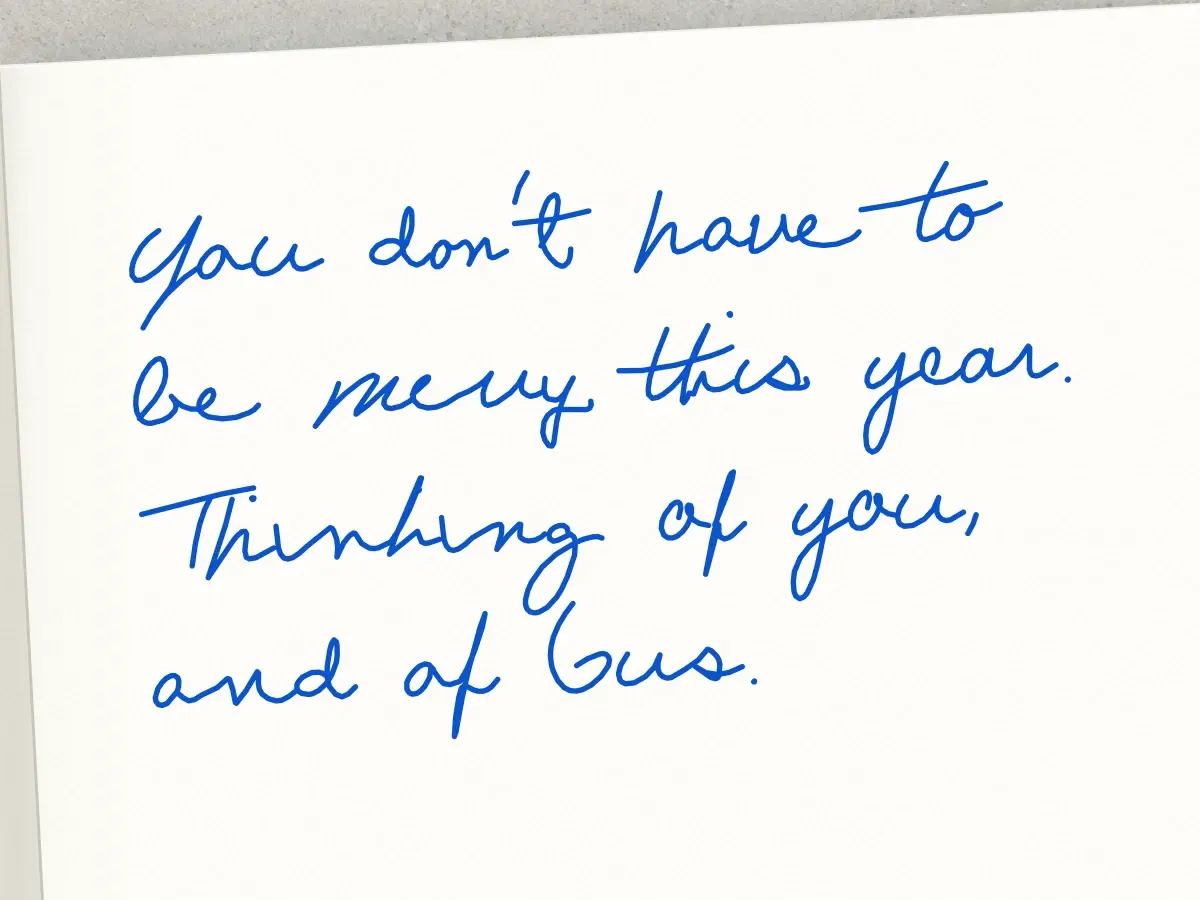
Handwriting example · Constance
Your edited message is previewed in the designer.
When they've lost a mom or dad
Most parents ran some part of Christmas, so name the part they ran, whether it was the lights or the fudge. Use "your mom" or her first name, whichever you'd say out loud.
When they've lost a husband, wife or partner
A first Christmas alone is full of jobs the other person used to do. Name one, and if you can, offer to do it.
When they've lost a child
Say the child's name: many bereaved parents want to hear it, and going quiet leaves them more alone. Keep it short, and leave out comparisons and anything that starts with "at least."
When it's a friend or a pet
These losses get fewer cards than they deserve, so yours will be noticed. Write it as seriously as you would for family.
If you didn't know them well
Short and plain is right here. If you never met the person, say how you know of them; if you work together, take one worry off their plate.
Offer one thing, or nothing at all
"Let me know if you need anything" hands a grieving person a job. Name one thing with a day attached, or offer nothing and say so.
Fix the envelope first
If their husband or wife died this year, address the envelope to them alone: Mrs. Patricia Brandt, or just Patricia Brandt, not Mr. and Mrs. Wayne Brandt. Then change that line on your card list now, so it doesn't come back next December.
Mail by December 17, but late is fine
USPS recommends mailing First-Class cards by December 17, 2026 for Christmas delivery, and December mail runs slow. If you miss it, send it anyway. A card that arrives on the 29th still says you remembered, and it lands after most of the other cards have stopped.
Choose a quiet card
A winter scene or a plain front sits better than "Merry and Bright" or a photo of your family in matching pajamas. If you usually tuck a year-in-review letter into your cards, leave it out of this one.
Sign it so they can place you
A grieving house gets a lot of mail, so make yours easy to place. Sign with your full names, or add a clue: "Ruth and Ed Kowalski, the blue house on the corner" or "Nadia, from Glen's bowling league." Keep the message to two or three sentences; about 300 characters fits at full size.
What not to write
Skip anything that starts with "at least," talk of heaven or God's plan unless it's their own faith, "time heals," "stay strong" and telling them you know how they feel. Leave out "let me know if you need anything" too. It hands them a job. Name one thing you'll do, or offer nothing.
More help with your cards
Christmas card messages for everyone else on your list
How to address an envelope, with examples
Questions about writing your card
Should you send a Christmas card to someone who lost a loved one?
Yes, in almost every case. By December, a lot of people have stopped mentioning the person who died, and a card with their name in it tells the family someone remembers. If the family has asked for no cards this year, respect that. Otherwise keep it short and don't expect one back.
What do you write in a Christmas card to someone who is grieving?
Name the person who died, say you're thinking of the family this Christmas, and add either one concrete offer or nothing at all. A short memory helps if you have one. Two or three sentences is plenty, and a short card is far better than no card.
How do you say merry Christmas to someone grieving?
You can still say it, but don't let it be the whole card. Lines like "Thinking of you this Christmas" or "I hope Christmas is gentle with you" leave room for however they feel, and the name of the person who died does the rest. If they've told you they want things as normal as possible, "Merry Christmas, with love" is fine.
Should I mention the person who died?
Yes, by name. You won't be reminding them; they haven't forgotten for a minute. Cruse, the UK bereavement charity, advises naming the person in a Christmas card, and The Compassionate Friends encourages bereaved parents to tell people they want to hear their child's name.
What if the death was very recent, or years ago?
If it happened in the last few weeks, I'd send a sympathy card instead and leave Christmas off the front. If it was years ago, mention them anyway. A line like "I thought of your dad when the lights went up" still lands long after everyone else has stopped saying his name.
Should a grieving family still send Christmas cards?
Only if you want to. Skipping a year is fine. If you do send them, you can sign with everyone living and add one line, like "Love from Carla, Nate and Ivy, always remembering Joe." The Compassionate Friends suggests wording like this for parents who have lost a child.
Sources and further reading
Cruse Bereavement Support: What to say at Christmas
The Compassionate Friends: Coping with Christmas and other seasonal events (PDF)
Hospice UK: What to write in holiday cards to someone who is grieving