
# How to Send Handwritten Thank You Cards Bulk (Real Pens)
If you are looking to send handwritten thank you cards bulk, writing 500 of them by hand will destroy your weekend. But sending printed cards with a fake cursive font will destroy your credibility.
The only way to send handwritten thank you cards bulk without looking cheap is by using robotic handwriting services. These are actual machines that hold real ballpoint pens to write your messages. Here is the operational playbook for sourcing a vendor, prepping your CRM data, and executing a bulk campaign that actually drives retention and sales.
Key Takeaways
Printed cursive is dead: Recipients immediately spot fake handwriting. Only use vendors that use real pens and actual ink.
Data hygiene is critical: A misspelled name or wrong address ruins the personalization effort and wastes money.
Integrate with your CRM: Do not do manual CSV uploads if you can trigger sends directly from HubSpot or Salesforce.
Always demand a physical proof: Never launch a 1,000 card campaign without holding a test card in your hands first.
The Problem with Fake Handwriting
There is a massive difference between actual handwritten cards and handwriting font. Most cheap bulk services (like standard print shops on Amazon or Etsy) just laser print a cursive font onto a card.
The human eye is incredibly good at detecting patterns. If every "e" and "t" looks identical, the illusion shatters instantly. Worse, there are no pen indentations on the paper. The result? The recipient feels tricked, and your thank you card goes straight into the recycling bin. True personalization requires variability and physical pressure on the paper. According to Forbes, personalization is a major driver of modern customer loyalty.
Evaluating Handwritten Thank You Cards Bulk Vendors
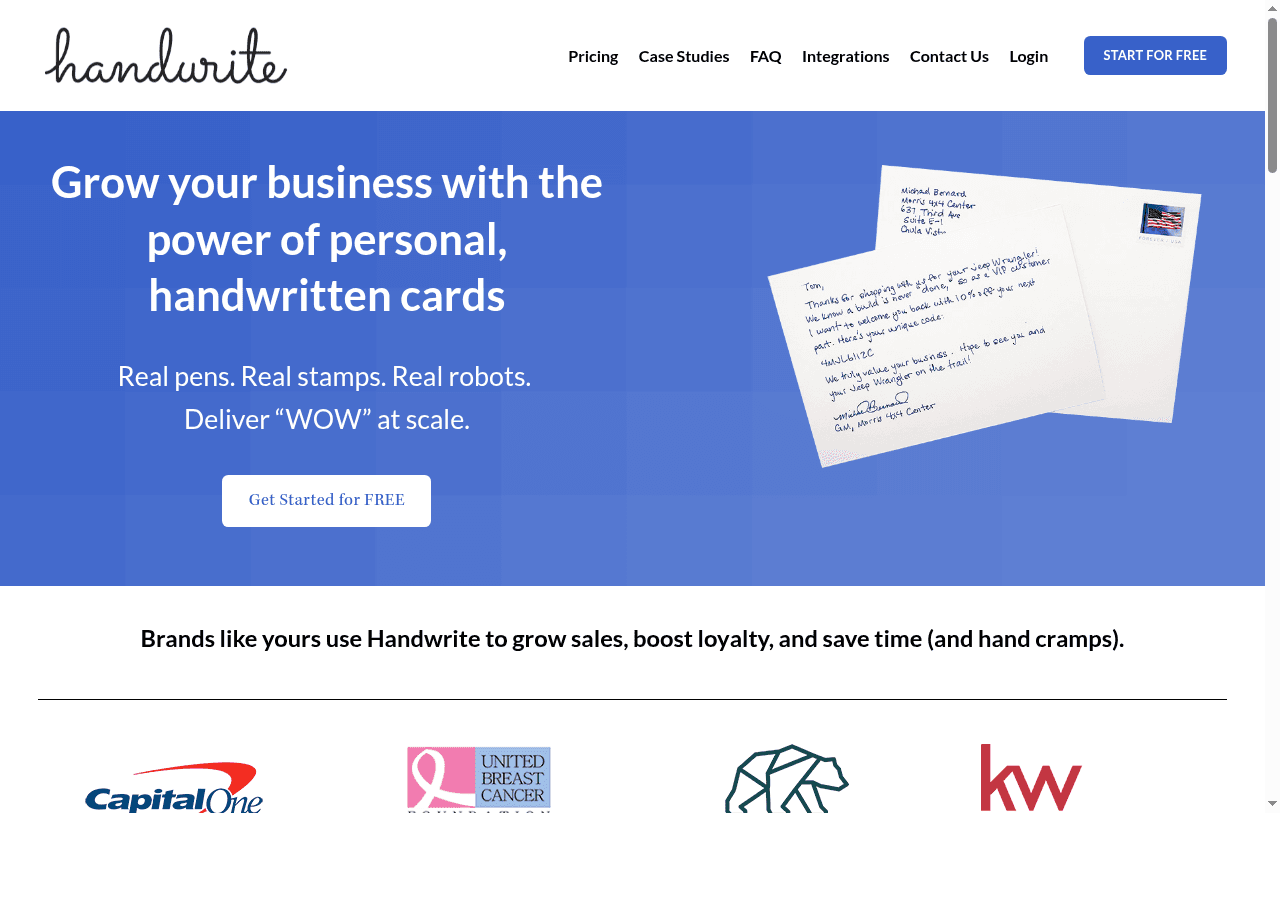
When looking for platforms that can send handwritten thank you cards bulk, you will run into vendors like Handwrytten, SimplyNoted, and Thankster.
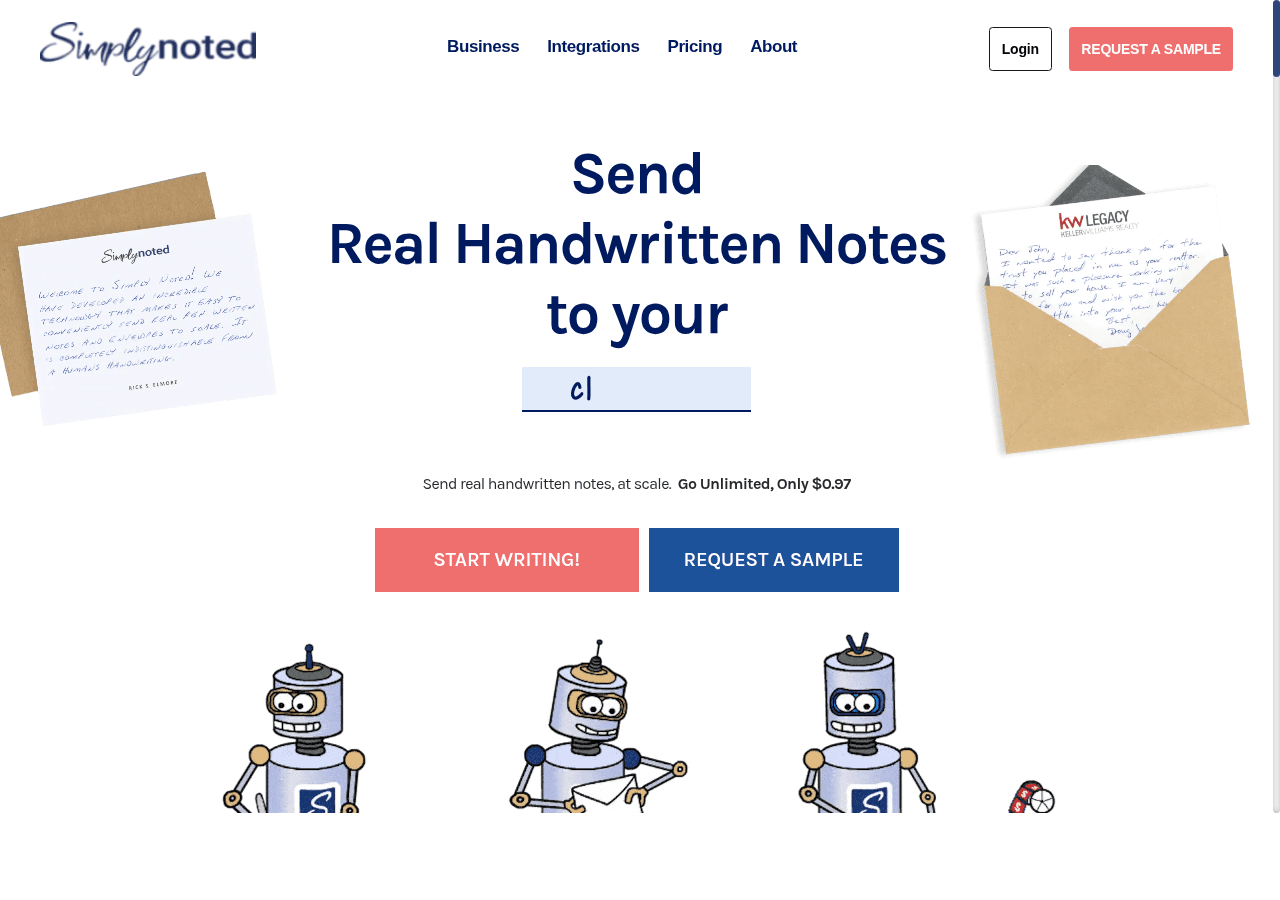
When evaluating these platforms, ignore the marketing copy and ask these three questions:
1. What kind of pens do you use? (Look for real ballpoint or fountain pens).
2. Can you handle my volume? (Some boutique shops cap out at 100 cards a week; you need enterprise capacity).
3. Do you mail directly to the USPS? (You want them to handle fulfillment, stamping, and mailing so you do not have to touch boxes of cards).
For recurring sends and event-based triggers, read how Scribble automations work.
Preparing Your Data for a Bulk Send
A robotic arm will write exactly what you tell it to. If your CRM has a contact named "john (do not email)", the robot will cheerfully write: *Dear john (do not email)*.
Before you send your list to a vendor:
Scrub first names: Capitalize the first letter, remove emojis, and strip out internal notes.
Verify addresses: Use an appropriate address-quality tool and review missing apartment or suite details. Address standardization cannot guarantee delivery or establish that a contact still works at a business.
Segment your list: A first-time buyer and a long-standing client may need different wording. Check whether each group has a meaningful reason for the note; then test the message. A publication’s home page does not establish a guaranteed benefit from segmentation. Further reading: Harvard Business Review.
Strategic Merge Tags
To scale properly, you need templates with merge tags (e.g., `[First Name]`, `[Company]`). Keep the core message uniform but leave room for specific details.
*Example:* "Hi `[First Name]`, thanks for trusting us with the `[Project Name]` rollout last week. It has been great working with the team at `[Company]`."
A shared message can still refer to the work you did together. If your message needs more space than a greeting card, see Scribble handwritten letters.
Measuring the ROI of Bulk Cards
Include the full cost of cards, preparation and postage in the budget. Decide what counts as a response before sending, and record purchases separately. Compare the mailed group with similar clients who did not receive a card when practical. Further reading: Data & Marketing Association.
The easiest method is using trackable assets on the card itself:
A custom URL (e.g., `yourdomain.com/thanks`)
A unique promo code printed inside the card.
A reply address or a short URL you control, so recipients have a clear way to respond.
Track replies and repeat business in your own CRM. If you want to send at recurring dates or after events in your system, read how Scribble automations work.
Frequently Asked Questions
What is the best way to send handwritten thank you cards bulk?
Use a robotic handwriting service that holds real pens and integrates with your CRM via API.
Are robot-written cards actually believable?
Yes, as long as the service uses real ink and algorithms that vary character spacing and ligature connections.
How much does a bulk handwritten card campaign cost?
Check the current credit prices for your mailing. A standard card credit includes the card, handwritten message, addressed envelope and US postage.
How long does it take to fulfill a bulk order?
Ask each vendor for the production capacity and postal estimate that apply to your quantity and deadline. A dispatch date and a delivery estimate are different; confirm both before scheduling a bulk mailing.