
Handwritten notes give real estate agents a way to follow up on a conversation, closing or referral. This guide explains when a note can fit, what to write and how to keep the habit manageable. It does not promise an open rate or a number of new listings.
Key Takeaways
A handwritten note is a physical follow-up; a mailed status does not tell you whether it was opened.
The best timing: after showings, at closing, on home anniversaries, and for prospecting cold homeowners
Keep notes to 3-5 sentences. Specificity beats length every time.
Consistent volume matters more than occasional perfection. Three notes a day compounds into hundreds of touchpoints a year.
Automation services like Scribble use robots with real pens to scale output without sacrificing the handwritten look
Track replies and referrals over a period that fits your market; there is no guaranteed timeline for new business.
Why Handwritten Notes Work in Real Estate
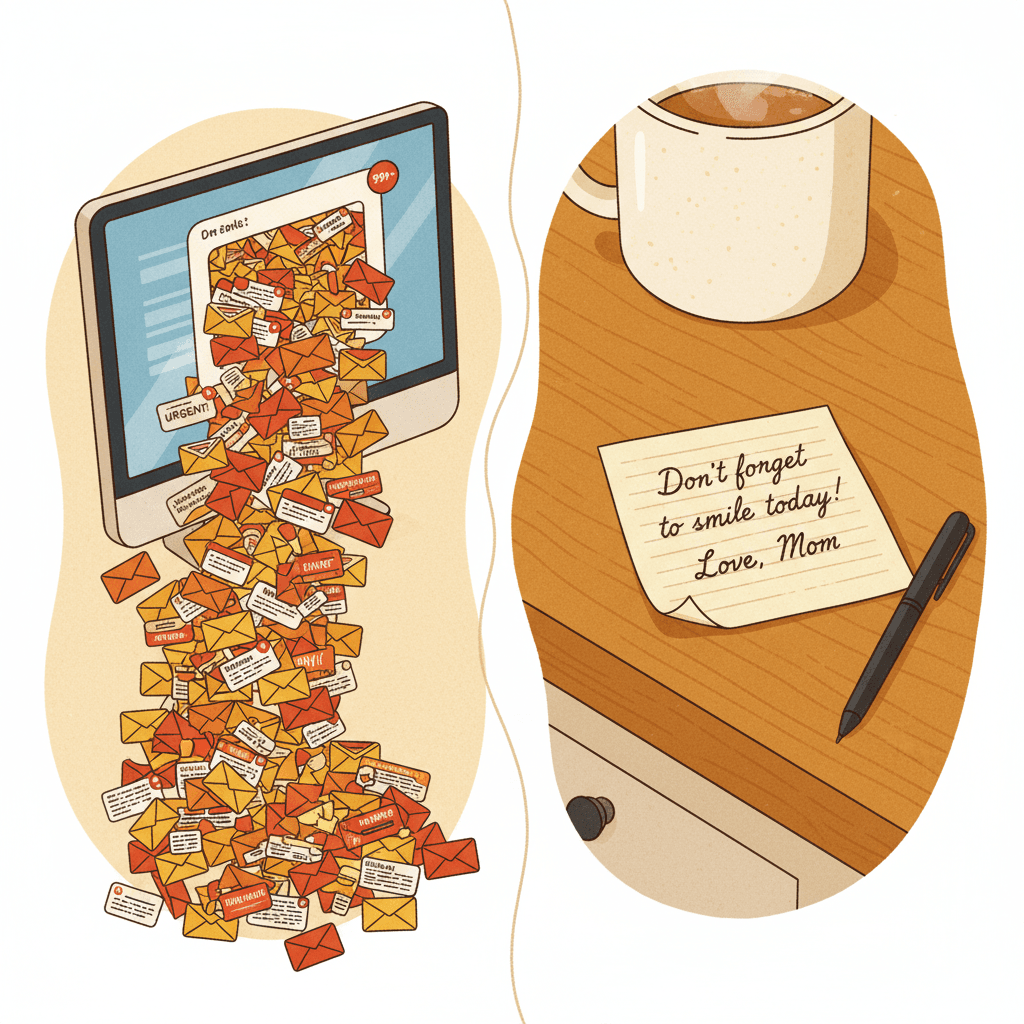
Real estate is a trust business. Buyers and sellers hand you the largest financial transaction of their lives based largely on how much they like and trust you. Email sequences don't build that. A 14-touch CRM drip campaign doesn't build that. A handwritten note sitting on someone's kitchen counter for two weeks does.
A note gives you room to mention the house, the viewing or a conversation you remember. That detail is what makes it personal. Keep a record of replies and referrals so you can see whether sending notes helps your own business.
Ben Graham, a real estate agent in Chandler, Arizona, switched from standard printed mailers to handwritten notes and credits a handwritten letter with closing a deal on a vacant lot that had stalled for months. The landowner had received standard mailers for years. The handwritten note was the one that got a response. NAR Magazine documented his approach as part of a wider look at agents returning to handwritten outreach.
The practical reality: most agents know this works and still don't do it consistently because it feels time-consuming. That gap between knowing and doing is where the opportunity lives.
When to Send Handwritten Notes as a Real Estate Agent
Timing matters as much as content. A note sent within 24-48 hours of a meaningful interaction lands differently than one sent three weeks later.
Here are the moments worth putting a note in the mail:
After showings. Send a brief thank-you within 24 hours. Don't pitch another property. Acknowledge their time and reference something specific you noticed about what they're looking for. It takes two minutes and makes you memorable in a way that a follow-up email simply doesn't.
After open houses. Everyone who left contact info is getting an automated email from your CRM. A handwritten note to a handful of the most engaged visitors is unusual enough to stand out completely.
At closing. A closing gift is expected. A personal note that references something specific about the transaction, a challenge you navigated together, or something you genuinely appreciated about working with them, is what clients actually quote when they refer you to someone else.
Home anniversaries. One year after closing. Three years. Five years. Clients who feel remembered become referral sources. Clients who feel like a transaction number don't. An anniversary card requires almost no effort and creates outsized goodwill.
Prospecting cold homeowners. If you're farming a neighborhood, a handwritten note to longtime homeowners cuts through in a way that printed postcards no longer do. The format itself signals that a real person took time to reach out personally.
Random touchpoints. A note following up after a chance conversation at a local event, or congratulating someone on a life milestone you saw on social media, lands with more impact than a holiday card because nobody's expecting it.

Real Estate Handwritten Note Templates That Actually Sound Human
The most common mistake: trying to fit too much into a note. Three to five sentences is the target. One genuine observation, one human connection, one low-pressure close. Here are templates organized by scenario:
After a showing:
"Hi [Name], it was great showing you [address] yesterday. I could tell the backyard caught your attention. I'll keep an eye out for similar properties with that kind of outdoor space and reach out when something comes up."
After closing:
"Hi [Name], so glad we found [address] for you. Navigating [specific challenge] together was one of those transactions I'll actually remember. Enjoy your new home, and please reach out if you ever need anything."
Home anniversary:
"Hi [Name], hard to believe it's been a year since you closed on [address]. Hope [specific feature they loved] has been everything you hoped. Happy home anniversary."
Prospecting a cold homeowner:
"Hi [Name], I work with buyers and sellers in [neighborhood] and wanted to reach out personally. If you ever consider selling or would just like a current market update, I'd be happy to connect. No pressure at all."
Referral thank-you:
"Hi [Name], I really appreciate you referring [referred person] to me. That kind of trust genuinely means a lot. I'll take great care of them."
After a price reduction or market update:
"Hi [Name], wanted to share a quick market update for [neighborhood]. Inventory is [up/down] and prices have shifted in a way that might be relevant to you. Happy to walk through the numbers whenever it's convenient."
The pattern across all of them: specific, brief, human. Generic notes are obvious even when handwritten. Specificity is what separates a note that gets kept from one that gets recycled.
How to Scale Handwritten Notes Real Estate Agents Send Each Month
If you're sending three to five notes per day, that's 60-100 cards per month. Writing those by hand is doable during slow periods, but consistency breaks down exactly when you're busiest, during active transaction periods when you're behind on every follow-up already.
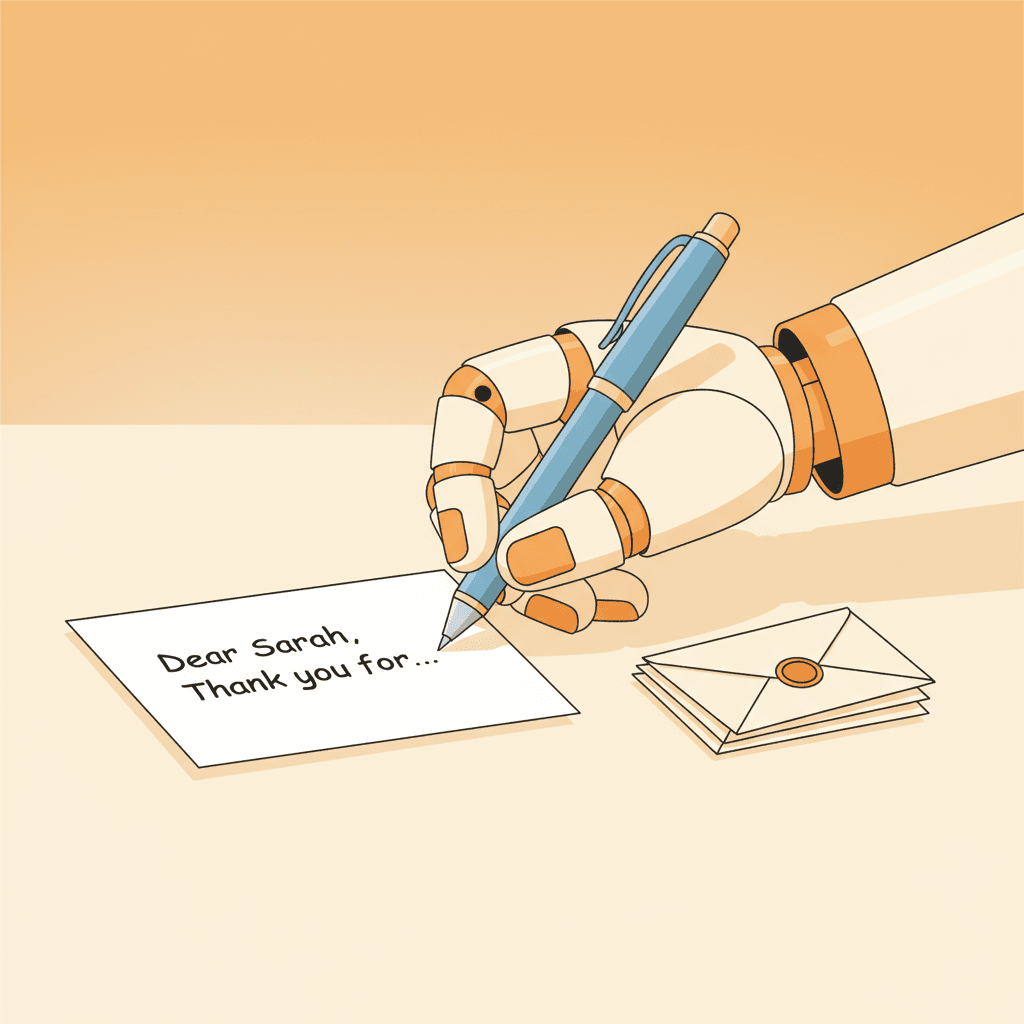
This is where services like Scribble make the habit sustainable. Scribble uses robots holding actual ballpoint pens to write notes that look genuinely handwritten. Not a printed handwriting font. Not a digital simulation. Pen pressed into paper, with the slight variation and natural pressure of real handwriting.
The workflow is simple: write your message once (or use a rotating set of templates personalized per segment), upload your contact list, and the cards get written and mailed within the US within a few days. You're paying for the physical output, postage, and mailing logistics, not hours of your own time.
One important clarification: the automation handles the physical writing. The personalization still has to come from you. A robot-written generic note is still a generic note. The templates above work because they're specific. Keep that standard whether you're writing by hand or using a service.
For a broader look at the format and why it holds its value even when robotically produced, this guide on what handwritten cards are covers the mechanics in plain terms.
If you want to compare the services available before committing to one, this comparison of handwritten card services covers pricing, quality, and volume capabilities across the major options.
Building Notes Into Your Daily CRM Workflow
Agents who do this consistently build it into a system rather than relying on good intentions. The practical setup:
Trigger automations. Set up CRM flags for when a note is due: showing attended, closing scheduled, anniversary date approaching. Don't rely on memory, especially not during busy transaction periods.
Daily time block. Even fifteen minutes at the start or end of the day is enough to write or queue three to five notes. The key is making it non-negotiable rather than optional.
Physical setup. Keep a stock of quality card stock and stamps at your desk. Every friction point between "I should send a note" and actually mailing one costs you cards that never get sent.
Segment your list. Many agents use handwritten notes for warm leads and active clients, with printed direct mail for cold neighborhood farming at higher volumes. That split keeps per-touch costs reasonable while reserving the higher-impact format for where conversion matters most.
Not sure which provider to use? Our side-by-side comparison of the best handwritten card services for real estate agents breaks down pricing, minimums, and CRM integrations across ten options.
FAQ
Do handwritten notes actually work for real estate prospecting?
A note can introduce you to a homeowner, but do not assume a long-time owner wants to sell. NAR’s feature describes individual agents’ experiences, not a controlled response-rate study. Respect a request not to receive further contact.
How often should a real estate agent send handwritten notes?
Three to five per day is a common target among agents who treat this as a primary follow-up strategy. Even one or two per day compounds into hundreds of touchpoints across your sphere of influence over a year. Consistency beats sporadic volume.
What should a real estate handwritten note actually say?
Keep it to three to five sentences. Be specific to the recipient, reference something real about your interaction or their situation, and avoid hard selling. The goal is to feel human and stay top of mind, not to close on the first note.
Can I use a service to send handwritten notes at scale?
Yes. Services like Scribble use robotic pens with real ink to produce notes that genuinely look handwritten. For agents sending dozens of cards per month, this is far more sustainable than writing every card by hand while maintaining better consistency.
How much do handwritten notes cost for real estate agents?
If you write the cards yourself, include stationery, postage and your time. A standard Scribble card is $6.99, including handwriting, envelope and US postage. The $2.45 rate requires buying 10,000 prepaid credits in one purchase; smaller purchases use the current volume table. Calculate cost per qualified referral from your own records; there is no guaranteed cost advantage over digital channels.
Are handwritten notes better than email for real estate follow-up?
Choose the channel that fits the relationship and the task. Use email for timely details and a card for a personal acknowledgment when appropriate. Compare your own outcomes; there is no verified universal open-rate advantage to apply to your farm.
Ready to send handwritten notes at volume without writing every card yourself? Scribble handles the physical writing so you keep the personal touch at any scale.